Students and professionals now dominate Auckland city centre as families move out
• April 13, 2026
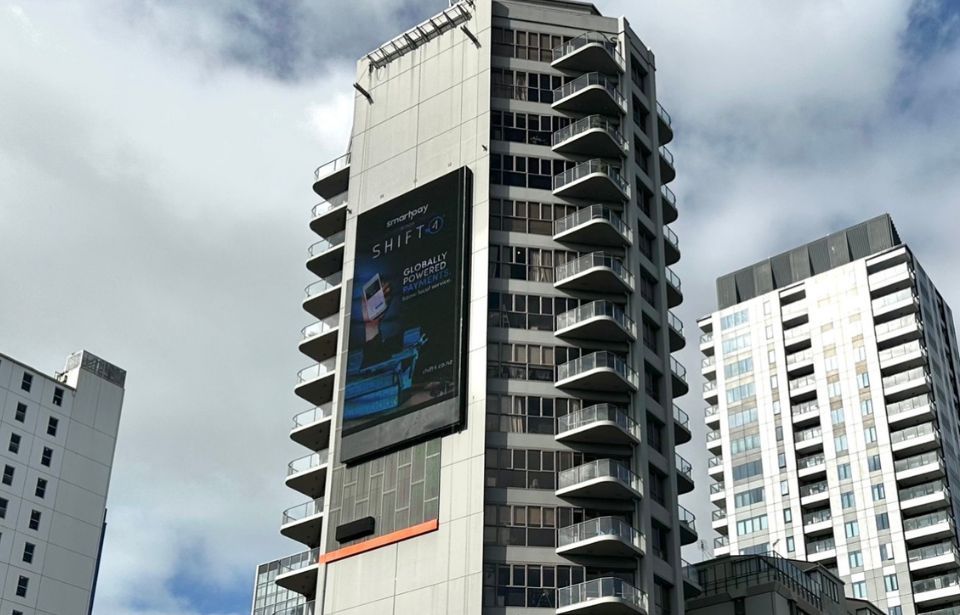
Rows of balconies in CBD, showing the concentration of apartment living in the city. Photo: Pamela Dagun
Limited housing spaces and rising rents are pushing families out of the Auckland CBD, reshaping who can afford to live there.
New research by Moving Champs NZ shows a one-bedroom apartment in the city centre costs between $2000 and $3000 a month, while similar apartments in suburban areas cost about $1500 to $2500.
Food and transportation costs a single person an average of another $1110 a month, while families spend an average of $2,886, making it harder for them to remain in the city.
Chief economist Kelvin Davidson, of Cotality NZ, said Auckland was still expensive to live in, but housing affordability had improved as house prices decreased.
“The situation has at least been improving, with affordability for owner-occupiers currently back to its best level in five years as house prices have dropped . . . for renters it’s longer than that, at least if the household earns the median income and pays the median rent.”
However, Davidson said that housing affordability would be tougher for households renting with lower incomes.
Real estate agent Tarundeep Kaur said most renters in the CBD were university students and professionals who liked full access to amenities, jobs, and transport.
Statistics from Stats NZ show young people aged 15-19 dominate city living, with 83 per cent of them being full-time students.
The percentage of residents with full-time jobs also increased to 53 per cent showing students and professionals are more likely the people who can afford to live in CBD.
Kaur said while inner-city living was convenient because of nearby amenities, it was not ideal for families, as parents often did not have easy access to schools for their children.
Kaur also said families were at a disadvantage as parents often covered the full cost of living for the whole family, whereas students and professionals often shared rent and expenses with flatmates.

Melanie Blanco and her husband and children celebrating their new home last year after renting an apartment in CBD for several years. Photo: Supplied
Forty-one-year-old Melanie Blanco said she and her husband used to stay in a $380 weekly rent studio apartment in 2020 but moved out of the CBD when their two children from overseas came to live with them.
“We thought about renting a three-bedroom apartment [in the CBD], but we realised how expensive it was, especially with just Cliff [her husband] and me paying,” she said.
The family rented a house for a few years and eventually bought a $1.3 million home in Mount Roskill.
Blanco said that moving out of CBD allowed their family to have more housing space, free parking and be closer to their children’s school.
Kaur said buying or renting near the Auckland CBD was often what people with families did to get a bigger space at a more affordable price.
Data also shows an increase in the number of families in suburbs near the CBD, such as Grey Lynn, rising from 669 in 2018 to 705 in 2023, as well as in Mount Eden, from 5832 to 5967 in the same period.
Kaur said she would not be surprised if the trend continued, as more families looked to rent and buy houses in nearby suburbs.
AUDIO BEYOND THE INTERVIEW: Tarundeep Kaur on why CBD living depends on lifestyle and life stage
-----
AI was not used in the creation of this story.
Students and professionals now dominate Auckland city centre as families move out
Pamela Dagun • April 13, 2026
Painting the town: Auckland CBD brought to life by young artists
Clementine McIntyre • April 13, 2026
Students and professionals now dominate Auckland city centre as families move out
Pamela Dagun • April 13, 2026
Painting the town: Auckland CBD brought to life by young artists
Clementine McIntyre • April 13, 2026