Te reo Māori children’s books survive despite policy changes
• May 13, 2026
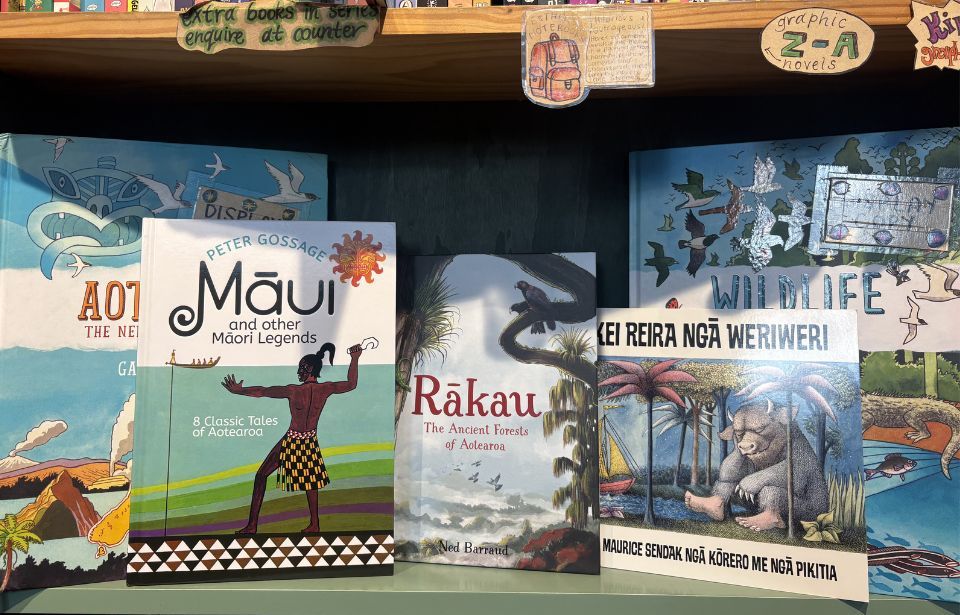
A display of Te Ao Māori children’s picture books at Little Unity bookstore in Auckland CBD. Photo: Maddy Short
As concerns grow over the use of Te Reo Māori in classrooms, community organisations are stepping in to keep the language visible in children’s books.
Last year, Education Minister, Erica Stanford changed the rules so that most Māori words are removed from new early learning books.
The change was intended to support English learning in schools, but critics say it risks reducing the everyday use of Te Reo Māori in classrooms.
At an urgent Waitangi Tribunal hearing, Te Akatea a Māori education organisation rejected what it calls the recolonisation of education.
The group argued that limiting Te Reo Māori in educational resources undermines efforts to normalise the language and could have long term impacts on how Tamariki engages with it.
While government policies continue to shift, concerns are raised about the reduced amount of exposure of children's books in Te reo Māori.
Charities like the Storytime Foundation say they are moving in the opposite direction.
Chief Executive Gilli Sinclair says the organisation is going against the trend as the total number of Māori books they are in their programmes has increased over the past few years.
The organisation has a focus on growing the access of bilingual and culturally relevant materials, she says.
Despite the changes made by Erica Stanford, Sinclair says the foundation prioritises the needs of the people they serve and have not removed any Te Reo or bilingual books from their programme.
"We are not funded by Ministry of Education and as a charity are free to make our own decisions, based on our populations needs."
Professor of Māori philosophy of education at AUT [Auckland University of Technology], Georgina Tuari Stewart, says the issue may be more about policy direction than actual access.
Te Reo Māori children’s books are typically published by state education agencies or companies contracted by them she says.
"Decline in their production reflects changes in government priorities for providing financial support for these publishing activities."
The creation of new Te Reo Māori content has not stopped but is developing in how and where it is produced.
There are already a wide range of titles and a strong supply of Te Reo Māori print resources in Māori medium classrooms and schools, she says.
"Any hiatus in publishing of new books is not particularly relevant or meaningful."
While government policy may be reshaping what gets funded and published, it has not stopped the presence and love towards Te Reo Māori in children’s books.
The responsibility is increasingly shifting beyond the state, with charities, communities and independent creators driving its visibility.
With charities and communities leading the way, the future of Te Reo Māori in children’s books relies on those choosing to keep it alive.
-----
AI was not used in the creation of this story.


Entrepreneurial platform for migrant women hopes to help change negative narratives
Keesha Levesque • June 8, 2026
Entrepreneurial platform for migrant women hopes to help change negative narratives
Keesha Levesque • June 8, 2026