Auckland has some free places to hang out, but they are hardly used
• May 20, 2026
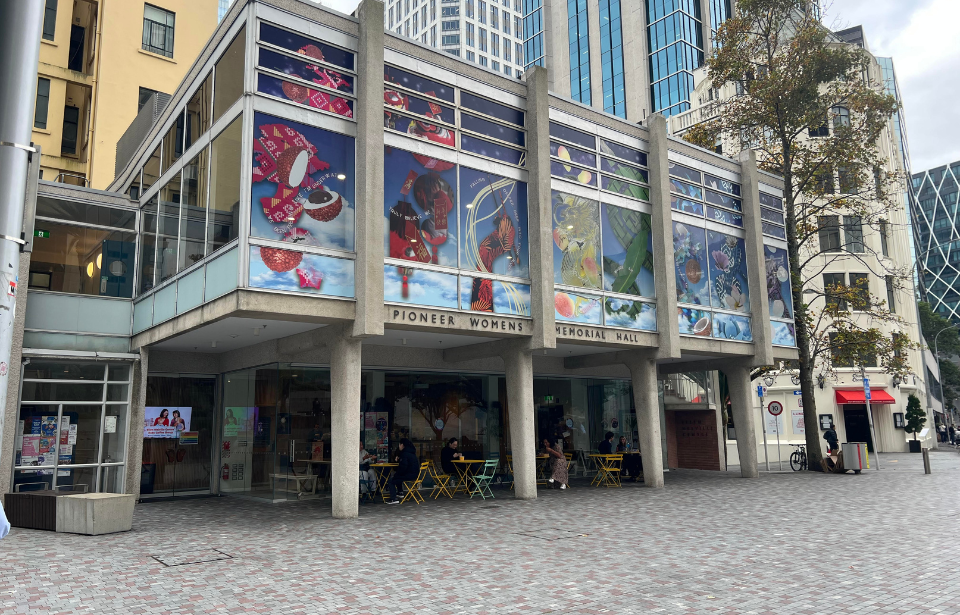
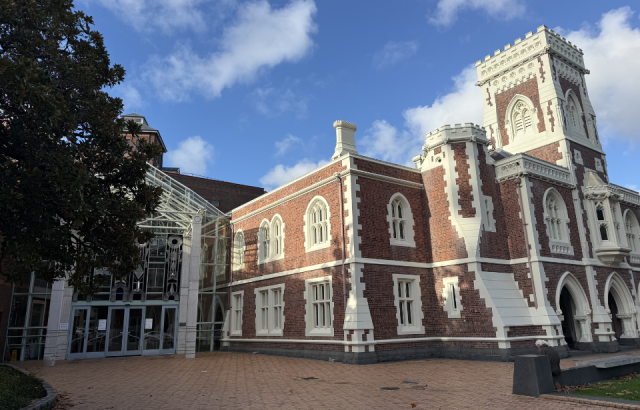
The Ellen Melville Hall, formerly known as Pioneer Women's Memorial Hall. Photo: Kieron McVeigh
Auckland’s CBD has ingredients for a thriving city centre with so-called "third spaces" offering people to gather, linger, and feel part of a community.
Yet many Aucklanders say they feel there is nowhere to hang out in the city centre.
Space where people can gather freely, also known also as third spaces, are considered essential to city life, but Auckland is struggling to get them right.
The co-founder and co-director of the Urban Advisory, Greer O’Donnell, says the city centre does have third spaces, but the issue is what surrounds them.
Homelessness, crime, and a declining economy have pushed people away from these spaces, making the city centre feel unwelcoming, she says.
“Most people don’t go there to hang out. They only go if there’s a specific reason,” says O’Donnell.
She says building more physical spaces alone won’t fix the problem.
“Sometimes we in New Zealand have this idea that if we build public realm [spaces], it will make everything better. But actually, most of the time it's about the social networks and non-physical interventions.”
Freelance journalist Rebekah White, who wrote about third spaces for New Zealand Geographic in 2018 , says Auckland has lagged behind other cities in providing free public gathering spaces.
“We’re not a third spaces-rich city.”
White says Auckland's weather is a core part of the problem. Beaches and parks work well in the summer but once the rain hits, those spaces disappear.
“We don't really have any cold weather, bad weather replacements.”
However, the founder of The Urban Room Foundation, Ben van Bruggen, says the problem goes deeper than just weather.
“Car-dependent cities and rich third space ecologies are largely incompatible. You can have one or the other,” he says.
Former Auckland design champion Ludo Campbell-Reid says the inner city has seen real investment in recent years.
He says the Ellen Melville Hall in Freyberg Place and the Central City Library are some strong examples of third spaces done right.
Campbell-Reid describes the current state of the CBD as “disrupted in transition” rather than in permanent decline.
There has been a decline in foot traffic since Covid, particularly from office workers, and the City Rail Link construction has caused significant prolonged disruption in key areas, Campbell- Reid says.
“That combination has made it difficult for some informal and commercially driven third spaces to thrive."
Campbell-Reid says the opening of the City Rail Link will bring more people into the city on foot, meaning third spaces need to thrive.
O’Donnell warns that without tackling the deeper socio-economic issues, physical improvements will only go so far.
She says Auckland does not have the luxury of starting again the way Christchurch did after the earthquakes, a city she describes as a model for deliberate people-first planning,
“It’s complex . . . different people have different needs.
“You’ve got to do the work to understand the community to know what the actual problem is you’re trying to solve.”
-----
Our journalists sometimes use AI tools which are checked by humans for accuracy.
AI was used to transcribe audio from the interview.
Entrepreneurial platform for migrant women hopes to help change negative narratives
Keesha Levesque • June 8, 2026
Entrepreneurial platform for migrant women hopes to help change negative narratives
Keesha Levesque • June 8, 2026