Making our city safer? Multiple security patrols in Auckland CBD, but with limited powers
• April 22, 2026
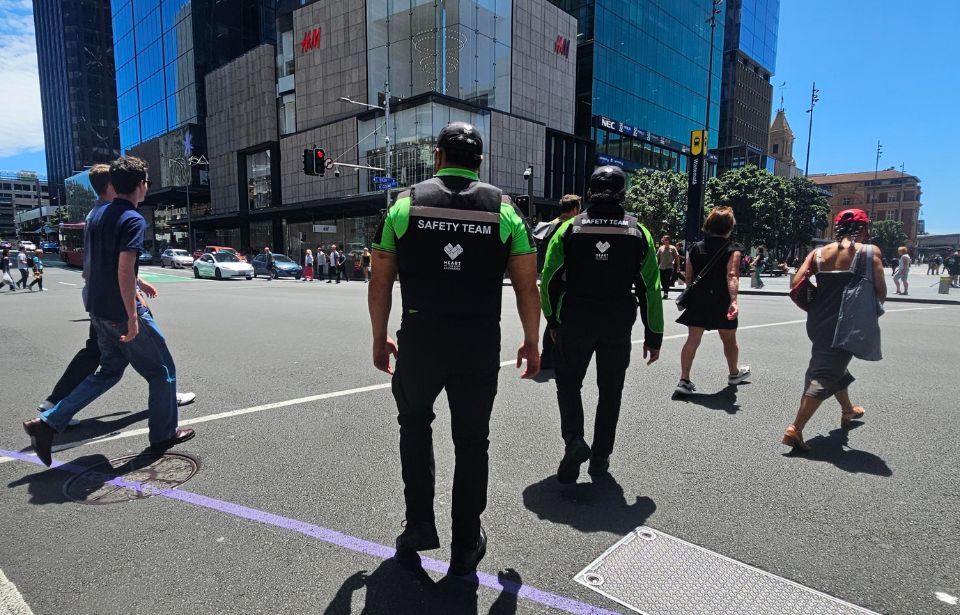
Heart of the City security guards patrolling Auckland CBD. Photo: Supplied.
Since Covid, Aucklanders have seen a variety of uniformed officers patrolling the CBD, and while their visibility is high, their powers are not well understood.
At least four types of security officers are roaming the same inner-city streets, coming from a combination of council, volunteer and private organisations, each focusing on different issues.
None have powers of arrest and mainly serve as a visible deterrent.
Chief executive of the New Zealand Security Association Gary Morrison says security guards hold no special authority.
“The role of security is very much to observe, protect and report, it’s not to engage . . . in simple terms, security staff have no additional powers than any other citizen.”
Chief executive of Heart of the City Viv Beck says the increase in security patrols started when businesses were concerned about crime rates.
“We were getting more and more complaints from businesses, and crime statistics were going up. They reached a peak around January 2023."
She says crime rates have since lowered again.
“The last quarter of 2025 was 18 per cent down on the same quarter in 2024 in terms of overall crime [in the CBD].”
Despite the decline in crime, there are no current plans to reduce the level of security patrols.
The Heart of the City security team is contracted from private company Absolute, and most of the funding comes from a targeted business rate collected by Auckland Council.
The rate is charged against commercial property owners in the CBD boundary, and so indirectly the business owners and tenants.
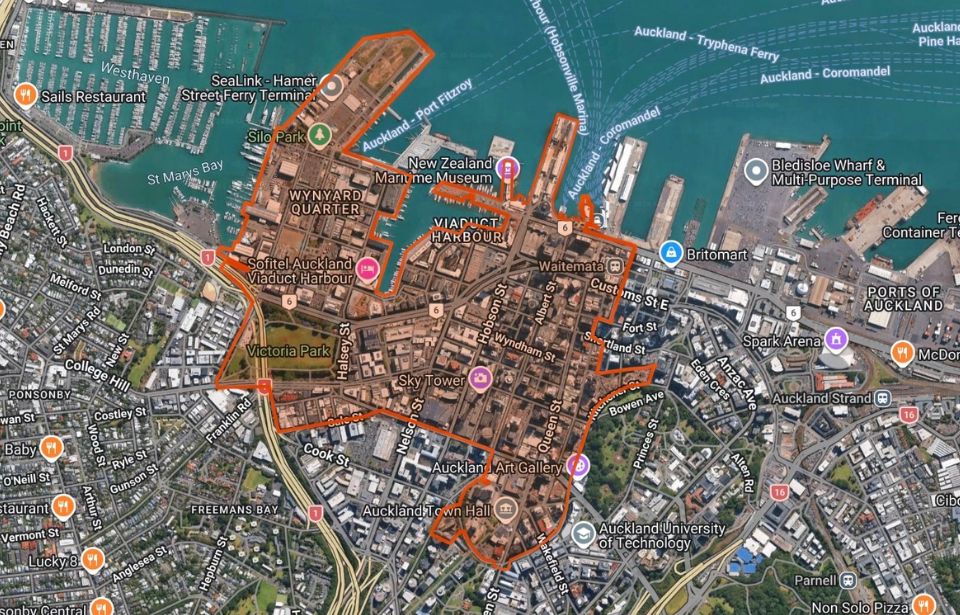
Map of Heart of the City Business Association’s boundary. Image: Google Maps/graphic by Gaby Lilley
Heart of the City officers are among the most visible patrols in the city centre, and their role is to respond to businesses.
“Businesses can call them if they need help, and they can de-escalate situations or escalate to police if it’s criminal activity,” Beck says.
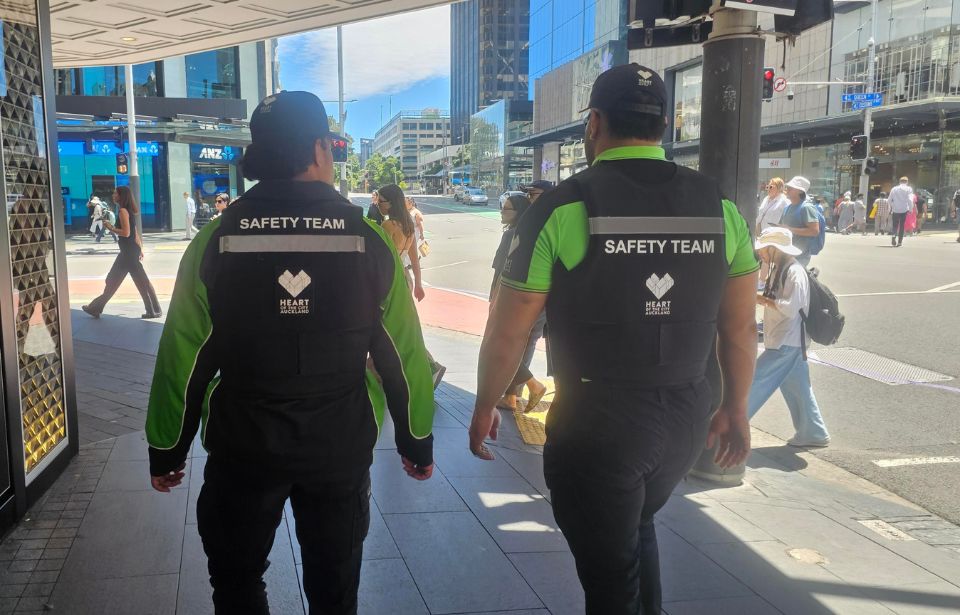
Heart of the City security wear green polos and black vests with ‘safety team’ on the back. Photo: Supplied.
While businesses are told to call these officers for help, they have no authority to engage criminals and no consistent direct line to police.
“We always encourage people if it's an illegal activity, ring police,” she says.
Another group patrolling the CBD is the Auckland Council Compliance Wardens, formerly called City-Watch.
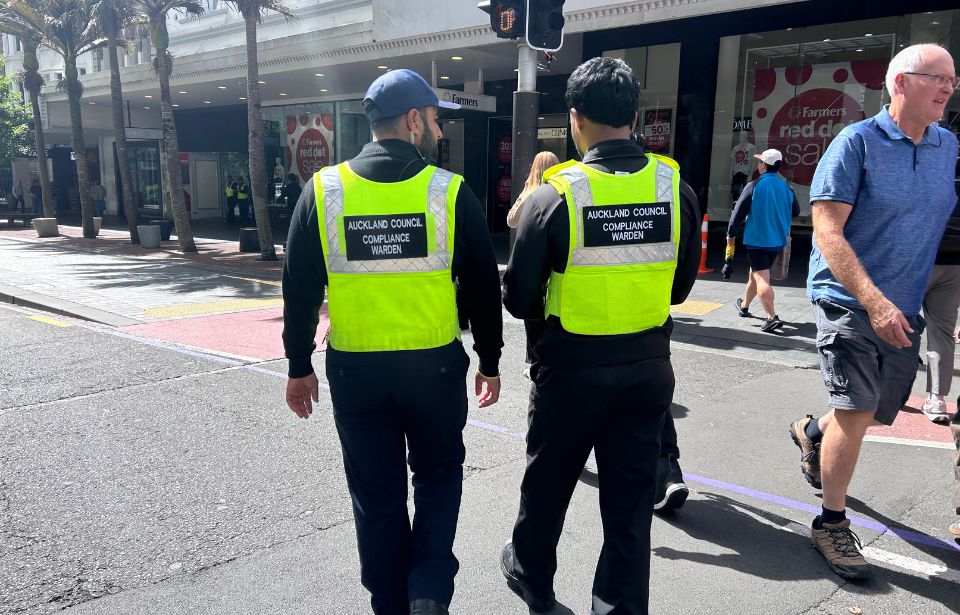
Auckland Council Compliance Wardens wear black shirts and a yellow hi-vis with their label on the back. Photo: Gaby Lilley.
These officers are funded by the council and CBD ratepayers, and only focus on issues around Auckland city bylaws, such as signage, excessive noise, encampments, obstructions, and breaches of liquor bans.
They may also refer homeless to outreach providers like the Auckland City Mission.
The council wardens are permitted to ask someone to stop or remove something breaching the bylaws and may issue warnings or fines.
"There is a slight difference between council and private [security] but that's more [about responding to] noise complaints, things like that, not necessarily physical power,” says Gary Morrison.
While council wardens patrol the city, members of the public still need to log complaints online.
Meanwhile, volunteers like community patrols and Māori wardens hold no security licences and have had no training. Their role is to observe the CBD areas and report any issues to police.
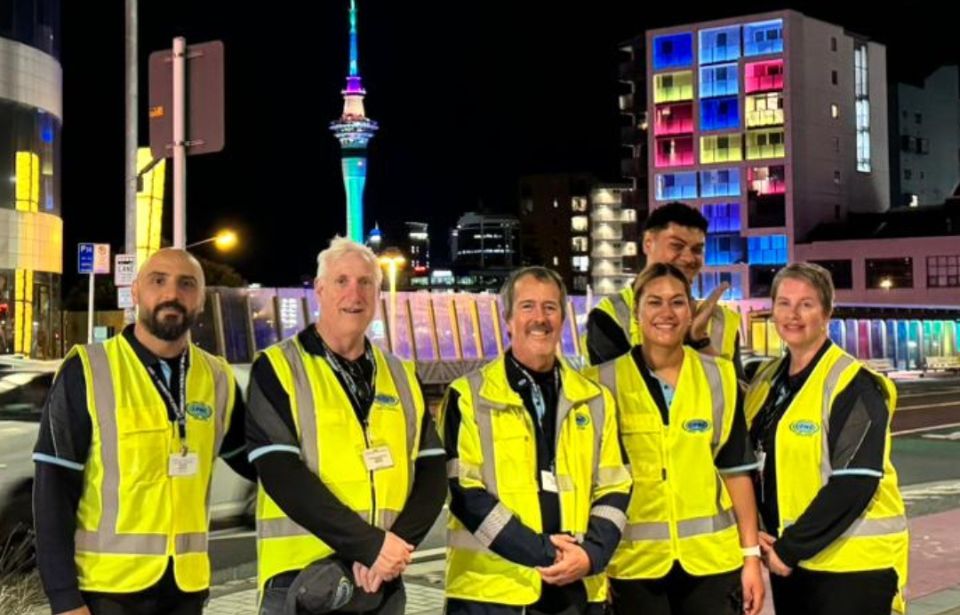
Community patrollers wear a CPNZ labeled polo with a yellow hi-vis. Photo: Supplied.
Chair of Community Patrols New Zealand Chris Lawton says volunteer patrols are not trained to engage.
“In fact, we train them to pull back and make sure that someone gets on the phone to the police and gives them a good description of what's happening.”
Made up of volunteers, Community Patrols are funded through government and council grants.
“It's a cheap way for councils to get a good number of hours of public safety and community safety,” Lawton says.
Māori Wardens, which were first established in the 1840s, focus on providing welfare to vulnerable communities and homeless, such as food and support contacts.
Meanwhile, private security guards can often be seen standing outside certain businesses and events, and while they typically do not patrol, they are among the visible security presence in the CBD.
They are paid for by the businesses who hire them to watch for shoplifting or aggressive behaviours, but they do not have authority to engage and will have to call police if trouble starts.
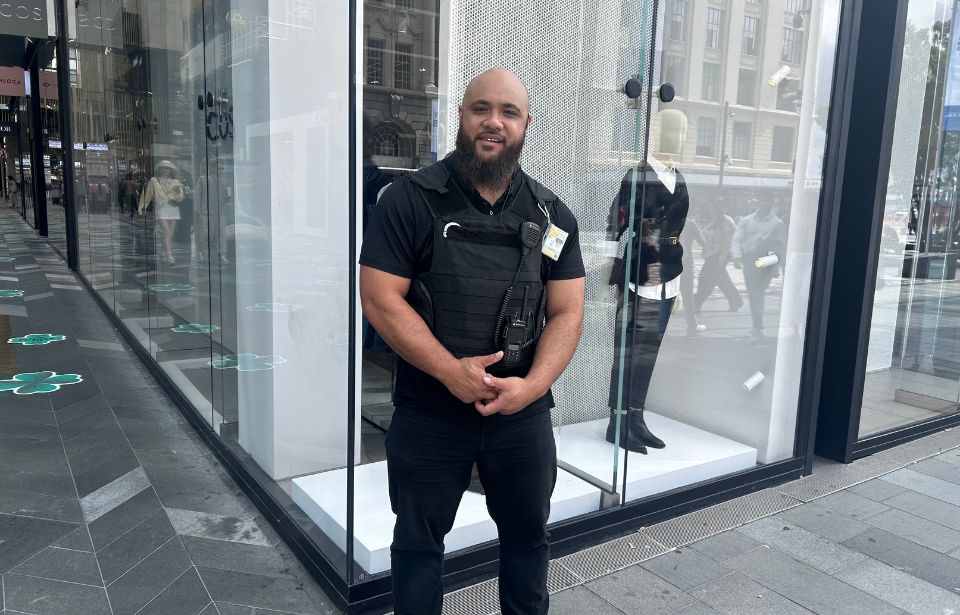
Private security may be seen wearing a variety of uniforms but commonly are in all black with their ID badge and company name visible. Photo: Gaby Lilley.
TWN's 2026 campaign looks at just what is going on in the Auckland CBD.
-----
Our journalists sometimes use AI tools which are checked by humans for accuracy.
*AI was used to transcribe interviews.



Entrepreneurial platform for migrant women hopes to help change negative narratives
Keesha Levesque • June 8, 2026
Entrepreneurial platform for migrant women hopes to help change negative narratives
Keesha Levesque • June 8, 2026