Community garden restores 16 varieties of precolonial kūmara
• April 1, 2026
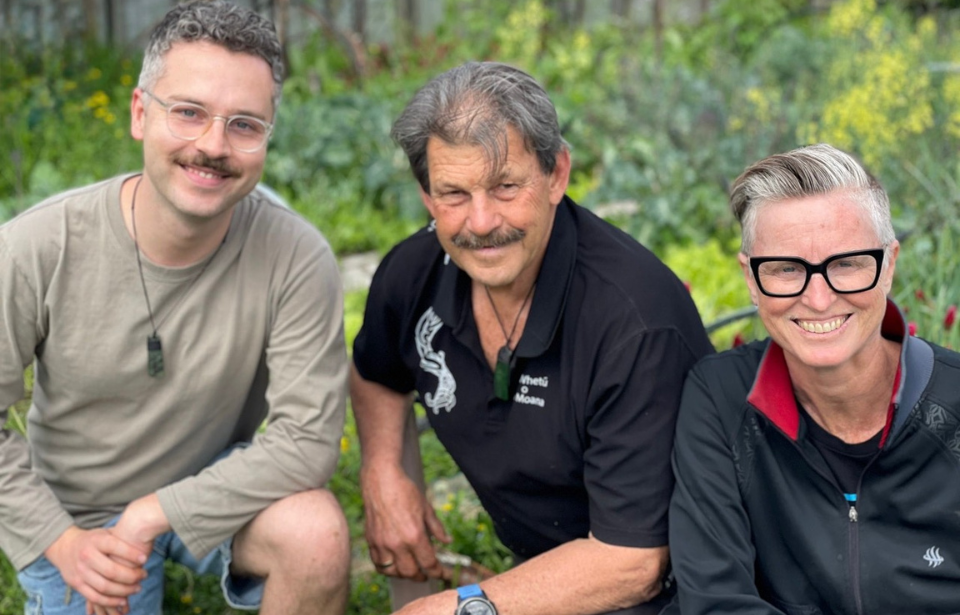
Organisers of Growing Point Dignan Street Community Garden. Photo: Supplied
Point Chevalier community garden Growing Point is reviving 16 varieties of precolonial kūmara to preserve cultural knowledge and enhance food resilience.
Organisers encouraged the public to visit the garden during a recent open day hosted as part of the Albert-Eden and Puketapapa Eco Festival.
The project is organised by groups at Growing Point, Dignan Street Community Garden. They aim to bring together traditional Māori knowledge systems and practices.
The project is aimed at helping protect indigenous food systems of growing, sustainability, and community involvement.
Garden organiser Luke Baker says the kūmara project is one of the most important endeavours they have done in the past two years.
“We would lose stories, we would lose nutrition. Something I am quite passionate about is the fact that many of these varieties are quite resilient to drought and flood. All of these things which we are getting more of in Auckland,” says Baker.
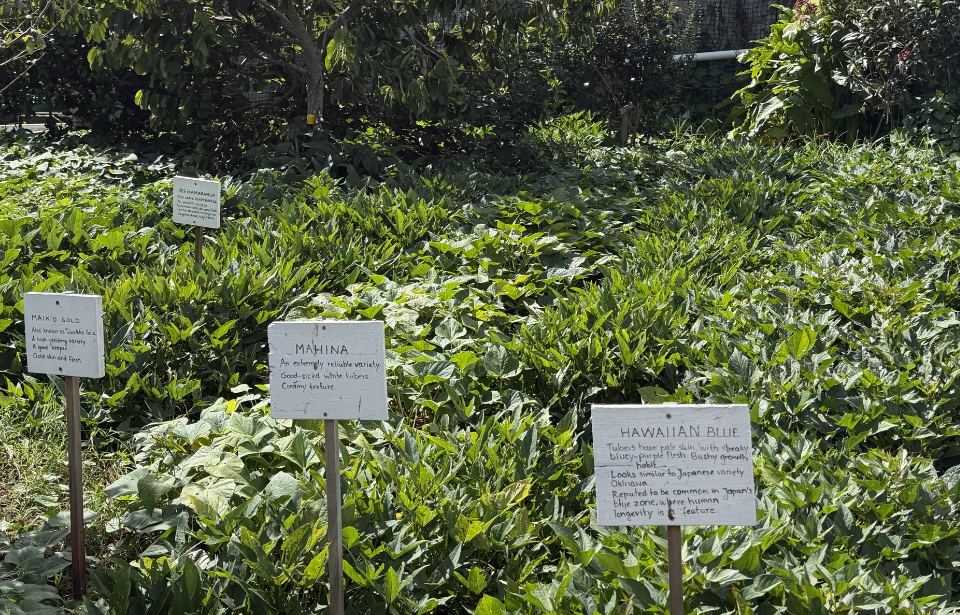
The garden plants a variety of traditional types of kūmara some of which are quite rare and adapted to varying environmental factors. Photo: Vidhhi Panchal
Co-organiser Rebecca Swan says the significance of the project is not limited to the production of food but emphasises cultural and historical importance.
“It’s about the biodiversity. It's the stories that they hold, it's the whakapapa that goes back to the original islands that they've come from,” she says.
The organisers said these crops have a comparatively low maintenance cost but a high yield, so they are an ideal fit in community gardens.
"It was such a staple food for Māori when they came here, they brought them on the waka, and it was their livelihood in terms of being able to feed their iwi,” says Swan.
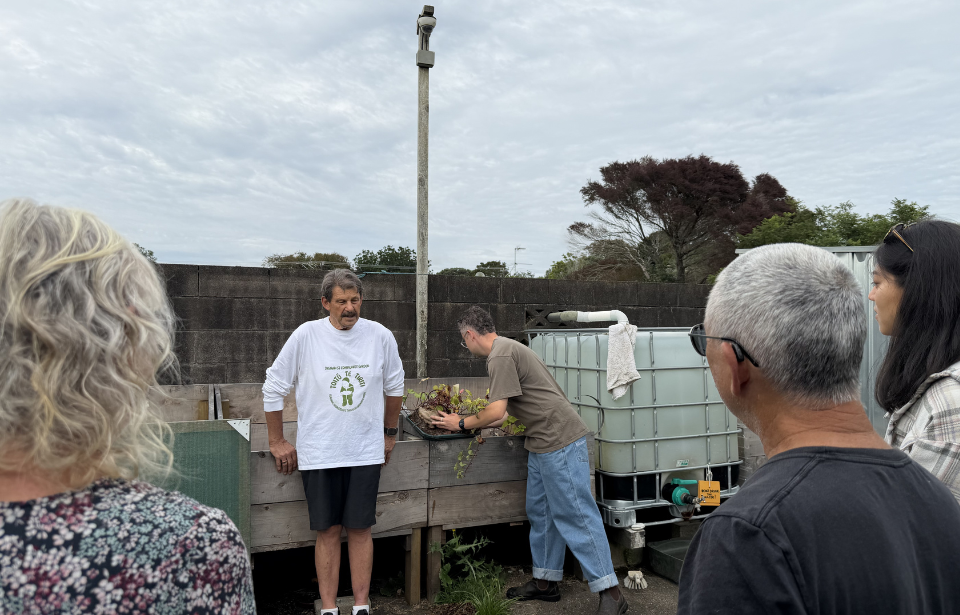
Matua Rob Small explains the process of growing kūmara. Photo: Vidhhi Panchal
Kūmara specialist and researcher Matua Rob Small has been a part of the group preserving the collection.
Small says being dependent on too few commercial crops can put people at risk of disease and effects of climate change.
"My dream is also to return some of these, particularly to the iwi gardens, but also to these community gardens who can keep those varieties alive,” he says.
Outside the kūmara project, organisers say they believe community gardens are involved in broader support of sustainability and climate resilience.
Growing Point serves as a skill-sharing space as well as a place where people can connect.
The initiative is part of the Albert-Eden and Puketapapa Eco Festival, a series of community-based climate action initiatives in the form of workshops and events and local initiatives.
The festival director, Trixi Pavey, says the festival aims to connect people to their communities.
“It's really important that we bring people together, the stronger we connect with the people immediately around us, with our neighbours, with our communities that we live in then the more we can all support each other when things happen like for example flooding,” say Pavey.
-----
Our journalists sometimes use AI tools which are checked by humans for accuracy.
AI was used to transcribe audio from the interview.

Pet laws create rental opportunities for dog owners, yet financial costs remain a barrier
Vidhhi Panchal • April 30, 2026

Professionals and students now dominate Auckland city centre as families move out
Pamela Dagun • April 30, 2026