Rise of violence against nurses at Middlemore Hospital
• March 25, 2026
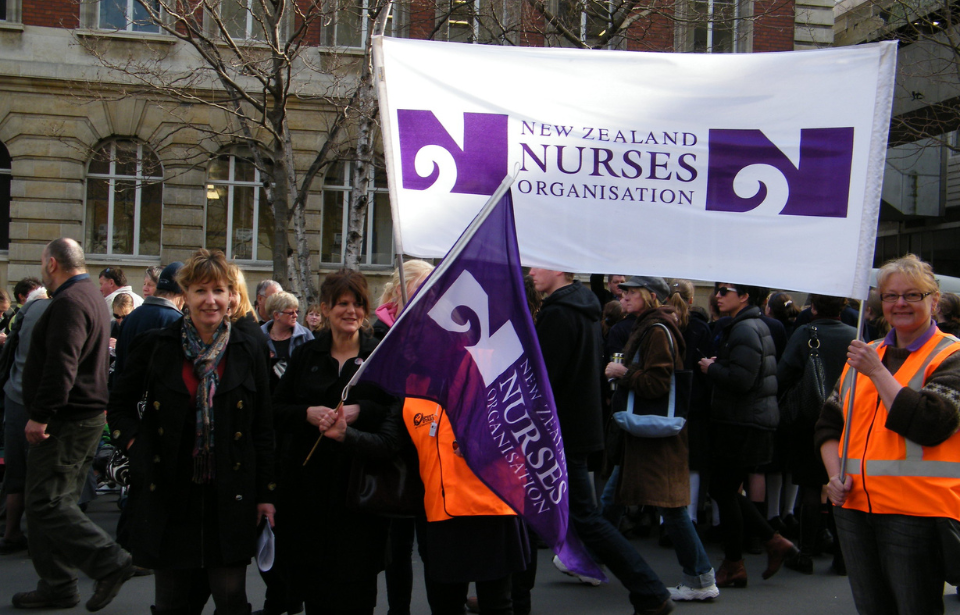
Nurses are facing more violence in the workplace. Photo by Claire Cullen licensed under CC BY-NC-ND 2.0
Healthcare workers in New Zealand are up to five times more likely to experience violence at work than those in other sectors, according to Health New Zealand data.
Zoe Henderson, a 21-year-old emergency department nurse at Middlemore Hospital, was just five months into her career when she witnessed an attack that would leave a lasting impact on her and her colleagues' sense of safety at work.
“It happened overnight in ED,” she said.
“This patient had been brought in by the police because of meth-related causes. My colleague was doing a wound dressing, and out of nowhere, he was strangled from behind.”
Henderson rushed into the room to find her colleague unconscious. “By the time I got in, he wasn’t breathing,” she said. “I basically had my arms under the patient's arms trying to hold pressure off while we were yelling for help.”
Despite attempts to call for assistance, security was unavailable.
They were reportedly tied up elsewhere in the hospital, meaning the responsibility to intervene fell entirely on a small group of nurses.
“It ended up being three of us trying to restrain a man who was over six feet four and on meth,” Henderson said.
“I’m 21, and the other nurse with me was much smaller. It was terrifying.”
After managing to free their colleague and begin first aid the patient continued violent behaviour.
“He started swinging at me, knocked monitors off the wall, and ran into another area,
“Eventually, he was tackled by one of our nurses and police who were in the area,” said Henderson.
While no lives were lost, the emotional and psychological toll was felt by witnesses of the incident.
“You anticipate some level of aggression in ED,” she said.
“But having anxiety attacks before work and continuing to face other types of aggression was quite triggering."
Henderson said the incident was not isolated.
A pattern of understaffing, increasing patient frustration, and a lack of consequences for violent behaviour has contributed to a worsening environment for healthcare workers.
“There were multiple times when I had to assess aggressive patients alone...you worry about your own safety, but also your other patients.”
Henderson believes the issue is getting worse, pointing to stretched resources and staffing shortages.
“We’re supposed to have one nurse for every three patients...but often, it’s closer to one for seven. That means longer wait times, more frustrated patients, and more risk for us.”
She also highlights what she sees as a troubling normalisation of abuse in healthcare.
“People think it’s just part of the job, but it shouldn’t be,” she said.
“There are cases where people assault nurses, and nothing really happens. Charges just get laid.”
For Zoe and many of her colleagues, the fear is not just about one incident, but a system that leaves them vulnerable.
“You want to go to work knowing you’ll be safe...but right now, that’s not guaranteed.”
As hospitals continue to face pressure from growing demand and limited resources, stories like Zoe’s are prompting calls for better staffing and a stronger security presence.
-----
Our journalists sometimes use AI tools which are checked by humans for accuracy.
AI was used to help with research.
AI was used to transcribe audio from the interview.


Young Kiwi athlete Thomas Cowan makes his debut on the world stage
Robbie Cuthbertson • March 25, 2026


Young Kiwi athlete Thomas Cowan makes his debut on the world stage
Robbie Cuthbertson • March 25, 2026